Tuesday, December 5, 2023

Armand Spitz (1904-1971)

Guest post by Ethan Christensen 
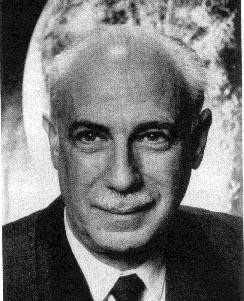
The character for the re-enactment is Armand Spitz, a planetarium designer who was born in Philadelphia in 1904. He attended public schools and was enrolled in both the University of
Pennsylvania and Cincinnati but never received a degree. He then began to work as a journalist and reporter to create his newspaper. He achieved this goal by saving up to purchase the Township News in Brookline, Pennsylvania, and founded the Spitz Publishing Company. The venture was short-lived as the wrath of the Great Depression caused Spitz to lose his company. His interest in the stars followed while he was working on a freighter and learned celestial navigation, he then created a
sextant out of a water-filled dish pan, a board, and a toothpick. This ignited the spark and he began his fascination with creating simplified astronomical instruments.

He then served as an assistant astronomer and lecturer at Haverford College but was never able to become a faculty member where he lectured due to his lack of a formal astronomical education degree. As a result, Spitz referred to himself as an “interpreter of science.” His passion and love for astronomy led him to create many astronomical projects, including an accessible, low-cost planetarium and planetarium project to show everyone the wonders of astronomy. This project had its roots in Armand showing star shows to his daughter at their home. He saw the awe of everyone at planetarium shows but felt it was a shame that only those who lived close to a city or had the money to house the expensive equipment of the time could see them. In the words of astronomy historian Jordan Marché, “Spitz’s accomplishment enacted the single greatest transformation of the American planetarium community.” During the re-enactment, I will be acting as Mr. Spitz since one of his successful low-cost, accessible Spitz A3P projectors has been used in the Manfred Olson Planetarium since 1965. Spitz passed away in 1971, his legacy lives on through his incredibly successful planetarium and projector designs. In a final message sent to the planetarium community he summed up his life with the following "The fact remains that into a sea of relative placidity, I was privileged to drop the proverbial pebble and the ripples have been moving outward ever since."

For further information and more detailed accounts of Spitz’s fascinating life, please reference the works cited below!


Works Cited


"Armand Spitz." Wikimedia. Last modified July 11, 2023. https://en.wikipedia.org/wiki/Armand_Spitz.

DiAbbatantuono, Brent P. "Armand Spitz—Seller of Stars." International Planetarium Society, August 1994 - March 1995. https://www.ips-planetarium.org/page/a_abbatantuono1995.

Dixon, Mark E. "Exploring Armand Spitz’s Love for Stars." Main Line Today, March 27, 2014. https://mainlinetoday.com/life-style/exploring-armand-spitzs-love-for-stars/.

Fortier, Rénald. "Blessed Be the One Who Brings the Wonders of the Cosmos to the Multitude: Armand Neustadter Spitz and His Planetarium Projectors, Part 1." The Ingenium Channel, May 29, 2022. https://ingeniumcanada.org/channel/articles/blessed-be-the-one-who-brings-the-wonders-of-the-cosmos-to-the-multitude-armand.

Fortier, Rénald. "Blessed Be the One Who Brings the Wonders of the Cosmos to the Multitude: Armand Neustadter Spitz and His Planetarium Projectors, Part 2." The Ingenium Channel, June 1, 2022. https://ingeniumcanada.org/channel/articles/blessed-be-the-one-who-brings-the-wonders-of-the-cosmos-to-the-multitude-armand.

Spitz-Rice, Verne, Joyce Towne, and Chadds Ford. "Who Was Armand Spitz? Father, Husband, Educator, Innovator." Planetarian, December 1, 2013. https://cdn.ymaws.com/www.ips-planetarium.org/resource/resmgr/pdf-pubs/Rice_and_Towne_Armand_Spitz_.pdf.

Friday, December 1, 2023

Leonard Grant, Jr.

Guest post by Bryan Rogers

For this historical re-enactment, I’ve chosen to create a fictional composite figure. My character is Leonard Grant Jr., an eighteen-year-old high school graduate grudgingly in search of employment during the construction of the Manfred Olson Planetarium on the University of Wisconsin-Milwaukee (UWM) campus. He would have rather been studying astronomy as a freshman at UWM, but a combination of economic pressures and racial discrimination prevented his enrollment. The eldest of nine children born to Gloria and Leonard Grant in 1947, Junior carries more than just his father’s name. He carries the weighted expectations of a harsh, emotionally distant father to sacrifice his educational aspirations to instead earn a steady paycheck to support his younger siblings following his father’s abrupt job loss. Junior ends up working on the construction crew that helps build the state-of-the-art planetarium instead of working towards an undergraduate degree in aeronautical engineering.

The Grants had migrated from Baton Rouge, Louisiana in 1946, drawn north by the promise of economic opportunity and away from the naked racist subjugation of the American South where Leonard Sr. and Gloria worked as sharecroppers near the same plantation where their ancestors had toiled under and escaped enslavement only two generations back. Leonard’s older brother, Julius had secured employment at the Seaman Body plant (later American Motors) on Richards and Capitol Drive, where Leonard was eventually hired as a factory worker days after he and Gloria had arrived in Milwaukee. He was fired from the assembly line in 1964, just months before the first national autoworkers union strike erupted against American Motors (which incidentally led to the last-ever union contracts signed with the company). In the eighteen years since their migration, Gloria had given birth to eleven more children, three of whom died during childbirth, and so Leonard Sr’s unemployment forced the eldest son, almost overnight, off the college path and into the job market.

The family rented a house on 17th and Meinecke in the neighborhood around North Division High School. Every Sunday they attended service down the block at the Mt. Carmel Baptist Church, which had recently been designed by Alonzo Robinson, Milwaukee’s first black architect. Junior remembered one sermon in particular where Pastor John Walton preached on the passage from Job 26:7 – “He stretches out the north over empty space and hangs the earth on nothing.” This “nothing”-ness which surrounded the earth (the image of which he had never seen) terrified Junior. When he asked his mother about the “nothing” later that same evening, Gloria led the child silently to the backyard, craned her head towards the sky until he, too, looked upward. She took his hand in hers and pointed towards the brightest star on the horizon and said softly, “honey, there may be nuthin’ up there, but this one here. This star led our people to freedom.” After his mother walked back inside the house, the little boy sat on Earth for what felt to him like an eternity, enveloped in the nothingness around him as his terror transmuted into a penetrating wonder. That night, he glimpsed a faintness of life emerging from the emptiness of space. 

From then on, stargazing became a nightly ritualed obsession for young Leonard. He learned about constellations and the ancient mythologies that connected civilizations to the stars. He became fascinated by the space race and avidly checked out all the science fiction books he could find at the public library on 26th and Center. He dreamed of being of a space explorer, an astronaut, or even an aeronautical engineer! He entered North Division High School in 1961 and by his junior year, he caught word from a cousin down in Baton Rouge about this so-called “Negro recruiter” named Charlie Smoot. Hired by NASA to attract African-American scientists and engineers to come south as part of the agency’s efforts at racial integration, Smoot had got seven black engineering students into NASA’s Cooperative Education Program. As part of the program, the students split time between their all-black Southern University–Baton Rouge and the Marshall Space Flight Center in Hunstville Alabama. That night, out back behind his childhood home, the sixteen year-old dreamt his own North star.

Leonard Jr. ran to the library the next day and begged the librarian to secure a copy of the previous week’s Chicago Defender newspaper with the headline that read “Negro College Youth To Boost First Moongoer Into Orbit?” He cut out and pasted the article’s opening lines to the inside cover of his stargazing journal, convinced that the same star which had freed his ancestors was now pointing him back to the place they’d fled.

Henry W. Maier

 Guest Post by Avarie Daly

Henry Maier was a real figure and Milwaukee’s longest serving mayor, holding the position from 1960 to 1988. He grew up in Dayton, Ohio, before moving to Milwaukee with his mother two years after his high school graduation in 1936. He served in the U.S. Navy during World War II after attending UW-Madison for his undergraduate degree. In 1948, he entered Milwaukee politics in the mayoral bid but finished in sixth place. Maier began his official political career as a Democrat on the Wisconsin State Senate in 1950, where he demonstrated leadership as the party floor leader. He ran for U.S. Senate six years later but was unsuccessful. In 1960, he won the mayoral election in Milwaukee with 58% of the popular vote. During his mayorship, he took budgetary efficiency seriously and taught his skills to other city leaders around the country, briefly serving as president of the National League of Cities and the U.S. Conference of Mayors. He also received an M.A. from UW-Milwaukee in 1964. One of his notable successes as mayor was his consolidation of the planning, housing, and redevelopment offices into one department, labeled the Department of City Development, which still exists today.

            Seven years into his mayorship, Maier was criticized for his handling of the 1967 Civil Disturbance, an event that started out as a nighttime “scuffle” between African American teenagers and Milwaukee police and escalated into looting, minor arson incidents, and sporadic gunfire. Maier cites in his autobiography that two policemen were shot two hours after the first reports of the disturbance were reported, which prompted him to call in 500 National Guardsmen and shut down the city for 24 hours. Although the police crew announced that everything was quiet at 4:50 a.m., Maier went through with the state of emergency and placed a curfew for the following night. The perspectives surrounding who was responsible for the escalation of the event were racially polarized, and many thought that Maier sided with white Milwaukeeans, labeling civil disturbance participants “hoodlums” in his state of emergency. This incident was also politically charged, as participants in the disturbance acted out of anger for the continued rejection of a fair housing law from the common council, which Mayor Maier also opposed.

            After his re-election in 1968, Maier proposed a “39-points” plan to address racial inequality in Milwaukee yet still opposed an open housing law. He was criticized for the lack of municipal reform in the plan, instead calling for state and federal support. Maier’s years as mayor also included downtown revitalization and the establishment of Summerfest. He prided himself on being “the mayor that made Milwaukee famous,” assigning this title to his autobiography in 1993.

As for his relationship to the re-enactment, Maier would have expressed his support for the construction of the UWM planetarium, recognizing the educational and entertainment value it would add to the city. Since it would have been funded by the state, he wouldn’t have had a problem with it. Maier was directly involved in the city’s social problems and might have commented on the political protests around the time of the planetarium’s establishment.


References


Harding, Bethany. “Henry W. Maier,” Encyclopedia of Milwaukee, https://emke.uwm.edu/entry/henry-w-maier/.


Maier. Henry W. The Mayor Who Made Milwaukee Famous: An Autobiography. Lanham, MD: Madison Books, 1993.


“Henry Maier.” Wikipedia, The Free Encyclopedia. https://en.wikipedia.org/wiki/Henry_Maier, accessed 1 Dec. 2023.


Thursday, November 30, 2023

Manfred Olson

 Guest post by Brady Steinbrecher

The subject of my work this semester is Manfred Olson and his work with our campus. The handle for my created Instagram page is physpro_olson. The included photo has been selected as the profile picture, as it is used to represent him on the planetarium website at the time of writing this. For this project, my goal is to highlight the activities on campus around the time of construction, as well as the process of the construction. This is achieved through the posting of pictures and captions depicting campus from the period, and also photos taken by Manfred Olson himself for a scrapbook that cataloged the construction of the physics building and planetarium. Manfred Olson was a physics professor on campus from 1931 to 1963. While working here he also helped with projects at the University of Chicago in the Metallurgical Laboratory in 1943 and then in Los Alamos from 1947 to 1949. He retired from teaching in 1963 to become the planetarium director, which is encapsulated in his final post on the timeline. Professor Olson was a very intelligent man who took passion in his research, but also in his teaching. He was a big advocate for UWM to get our planetarium, as he thought it would majorly change the way that we taught astronomy, and he was right. This is another aspect I attempt to convey through my posts, with the goal being to encapsulate the excitement he, along with many others on campus, must have been feeling at the time. He not only was getting his goal of the addition of a planetarium, but also a completely new and revolutionary physics building. I believe that, through my posts, the reader is able to not only view the life of Manfred Olson, but also feel his excitement for future prospects and witness his humor firsthand.

Percy Knox 1964 - 1968

 Guest Post by Hassan Richardson

My reenactment character is a fictional composite character by the name of Percy Knox (P.K.); an African American male teenager who attended Rufus King High School from 9th to 12th grade (1964-1967). His mother moved Percy to Rufus King High School during 9th grade due to conflicts with bussing in the city. Percy experienced some racial encounters as a new student here; the school was becoming increasingly Black which caused some racial tension at the time. This influenced Percy to befriend fellow African American students and get involved with putting Freedom Day posters in Milwaukee Public Schools. He attended Freedom School on May 18th, 1964, and was briefly instructed on Robert Henry Lawrence Jr (1935-1967), who was in the US Air Force and was a future prospect for US space missions at the time (became first African American astronaut). Lawrence was from Chicago, IL. Percy researched Robert Henry Lawrence Jr. and recaptured his long-time passion for astronomy. He continued his involvement by becoming more career-focused in 11th grade as he was set on becoming an astronomer and/or astronaut. UWM was a local and promising university at the time, especially for the physics department, hence the concluding development of the physics building and the Manfred Olson Planetarium (1966). Percy also attended several planetarium lectures held by physicist Manfred Olson. Lawrence and Olson were idols to Percy and inspired him to attend UWM (1967-1971) as a Physics (B.S.) major with an emphasis in astronomy. Tragically, Percy’s main role model Robert Henry Lawrence Jr.  died in December of 1967 in a fighter jet crash. He was remembered by his family, US Air Force, and those he impacted.


Polish Southsider: Stanley Wisialowski

 Guest post by Grant Thomas

I would like you to meet my reenactment character and my Great Grandfather, Stanley “Stash” Wisialowski. Born August 31st, 1910, in Milwaukee to Josephine, Polish woman, but Wisconsin native, and Jacob Wisialowski, Polish emigrant coming from western Poland around the Pomeranian region. Stanley would be the seventh of nine children to the couple and would become a major aid around the house after the death of his father around May of 1924. While education would not be a major aspiration of Stanley, he would enter vocational education and other small paying jobs. I would say one of the happiest days was marrying in May 1934 to Clementine Maciolek at St. Adelbert. Following marriage, he would gain work at Monarch’s company and with the birth of his two daughters Sandra (Sandy) in 1940 and Carole in 1943. Monarch’s was a popular place to work for the family as a number of his siblings, cousins, and other assorted families would also gain employment. Due in part to Monarch’s creating clothing for the war effort and having two young girls he would not serve in any branch of the military. Sadly, Sandra would pass in 1944 leaving a significant ache in his life and a wish to provide the best for his wife and living daughter. With the economic downturn of manufacturing Stanley would leave Monarch’s in the late 1950s.

Following a term of unemployment, he and his brother Max would create the Wize repair shop with the original set up being at his home, 28th and Lincoln. Later, for the store fronts, they were first at 1111 16th street and found a more permanent home at 1535 West Lincoln, their specialty being jackets, jeans, and other clothing items. The business would run from the 1960s to the 1970s and a fallout between the brothers over Max, possibly taking money for personal gain. Once the main shop closed Stanley would simply move the working machines back to his home and create the new version of the business in his basement taking subcontracts from local clothing stores or dry cleaners. Through this period, he would interact with multiple police officers and people of color giving the same pleasant service to anyone, as he would often say to my grandmother, “live and let live.” He did have some worries as a devout Catholic over Father James Groppi’s actions, but mostly from worrying about the safety of the young black men and women that the priest was working with through the Civil Rights Movement.

In general, he was described as a typical south side Polish man, able to speak both his ancestral tongue, Polish, and English in equal measures and being a shorter thin man yet getting stocky in his later years. Beloved by his family and keeping close with his siblings, particularly drinking Pabst with his surviving brothers, Max and Eugene and known for a love of dancing, able ability at bowling, and enjoying both flower cultivation and mushroom picking. Finally, his story ends in the same city he was born, at the age of 72 in February of 1982. 

Fred Harvey Harrington

Fred Harvey Harrington reenacted by Nathan Brown

Fred Harvey Harrington seated at his desk
Fred Harvey Harrington was the President of the University of Wisconsin from 1962 to 1970. Harrington was born in Watertown, New York, in the summer of 1912. As an adult, Harrington continued his education on the East Coast. Harrington attended Cornell University as an undergraduate and earned his PhD in History from New York University in 1937. From then on, except for a brief time working for the University of Arkansas from 1940 to 1944, Harrington spent the rest of his career in academia at the University of Wisconsin-Madison. In 1957, Harrington was appointed as the special assistant to Edwin Fred, the President of the University. This promotion prepared him for a career in academic administration. In 1958, Harrington was promoted to the position of vice president for academic affairs under the new president, Conrad Elvehjem. From this time onwards, Harrington played a key role in the development of the University of Wisconsin-Milwaukee (UWM). Although he was not directly involved with the construction of the Manfred Olson Planetarium, Harrington was zealous in his efforts to help UWM mature into the institution it is today. The efforts Harrington took to grow UWM included defining what principles should guide the growth of UWM, sharing research funds from Madison with UWM, working towards UWM’s autonomy from Madison, expanding UWM’s graduate programs, and expanding the physical campus of UWM. The protests of the late 1960s became disastrous for Harrington’s position as the President of the University of Wisconsin-Madison. Harrington lost support from the Board of Regents because of his lenient stance towards student protests. This led to his resignation in 1970. After his resignation, Harrington worked in India with the Ford Foundation until 1977 when returned to instructing history at the University of Wisconsin-Madison. Harrington subsequently retired in 1982. 


Bibliography

Cronon, E. David. “Fred Harvey Harrington, 1912-1995.” Wisconsin Magazine of History 78, no. 4 (1995): 294–295.

“Fred Harvey Harrington (President, 1962-1970).” University of Wisconsin-Madison. Board of Regents of the University of Wisconsin System, 2023. https://www.library.wisc.edu/archives/exhibits/campus-history-projects/chancellors-and-presidents-of-the-university-of-wisconsin-madison/fred-harvey-harrington-president-1962-1970/.

Fred Harvey Harrington. University of Wisconsin Archives. https://digital.library.wisc.edu/1711.dl/P46IC4M5BXUSM8B.

“Minutes of the Regular Meeting of the Board of Regents of the University of Wisconsin: July 13, 1957.” Edwin Broun Fred (1945-1958): Minutes of the University of Wisconsin Board of Regents. University of Wisconsin Board of Regents Collection. https://search.library.wisc.edu/digital/AZAOLYFQ6AKUOX87/full/ACDPCE5G7WKCHZ8Q.

Olson, Frederick. “Fred Harrington and the Development of UWM.” Frederick I. Olson Papers. University of Wisconsin-Milwaukee Libraries, Archives Department. UW-Milwaukee Libraries, Archives.

Thomas, Robert. “Fred Harrington, University Chief, Is Dead at 82.” The New York Times (New York, NY), April 9, 1995.